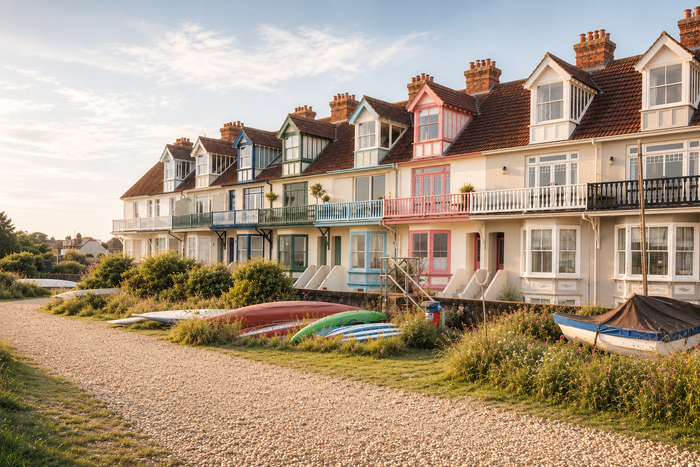


The LRM Studio is an artist-led studio, founded in London and shaped by life in Whitstable, Kent.
Discover original art, coastal home fragrance, and lifestyle pieces designed by British artist Lauren Rogers-Martin.

art for the home
How to Style Your Home with Original Art: A Room-by-Room Guide
“
The most beautiful homes aren't the most expensive. They're the ones that tell the most honest stories.
— Lauren Rogers-Martin, Founder
Original art changes a room. Not just aesthetically — though that too — but in the way a space feels to be in. A considered piece on the right wall shifts the energy of an entire room, giving it a reason and a point of view. The challenge is knowing where to start, and how to make choices that feel intentional rather than arbitrary.
Here's how we think about placing art, room by room.
The Living Room
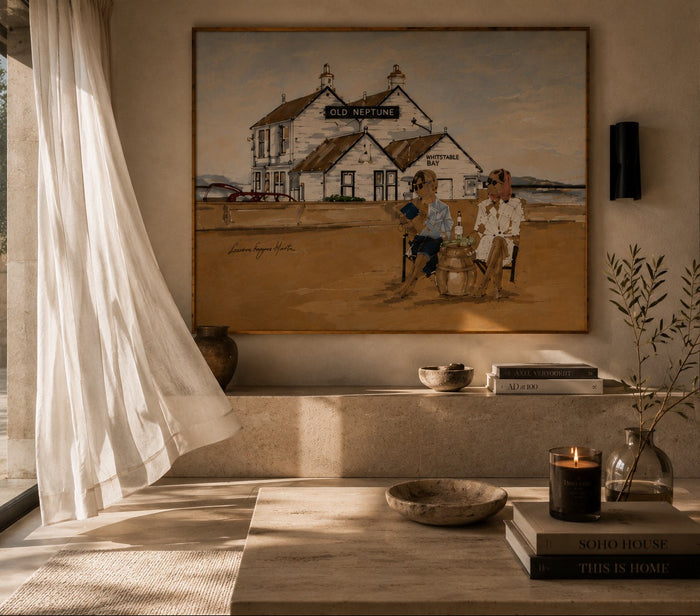
This is usually where the statement piece goes — and rightly so. The living room is where you spend the most time, entertain guests, and want the space to feel most fully realised. A larger original above a sofa or fireplace anchors the room and gives it a focal point. The key is scale: the work should be wide enough to feel deliberate (roughly two-thirds the width of the sofa behind it, if that's the placement) without crowding everything else out.
For coastal homes — or homes that draw their palette from the sea — an original landscape or seascape brings the outside in. Whitstable light has a quality that doesn't translate to a photograph; an original painting holds it in a way that feels alive.
The Hallway
Hallways are underestimated. They're the first thing you see when you come home, and they set the tone for the whole house. A smaller original or a series of prints hung at eye level can transform a utilitarian corridor into a genuine gallery moment. Consider pieces that reward close looking — something with texture and detail that you might pause at every time you pass.
The Bedroom
Here, restraint is everything. The bedroom should feel calm and restorative, so one or two carefully chosen pieces work better than a busy arrangement. Softer works — muted coastal palettes, quieter compositions — tend to suit the bedroom well. The piece above the bed should be hung with particular care: centred, at the right height, and never so large that it overwhelms the headboard.
This is also a wonderful room for something personal — a piece that means something specific to you, rather than what simply looks right.
The Kitchen and Dining Room
These rooms can handle more warmth and humour than you might expect. A botanical print, something with colour, or a piece that references food, gathering, or everyday abundance works well here. Art in the kitchen is an underused opportunity — it makes cooking feel like part of a considered life rather than just a task.
In the dining room, something that repays looking at over a long dinner is ideal. You want depth and interest rather than something you exhaust in one sitting.
The Home Office
The question to ask here is: what do you want to feel while you work? Something energising — bold colour, dynamic composition — will suit some people. Others prefer something calm and rooted, a piece that brings stillness into a busy working day. Either way, one strong original is usually better than a cluttered wall.
A Few Principles to Come Back To
Hang art at eye level — the centre of the piece should sit at roughly 145–150cm from the floor. This is the museum standard, and it works.
Give art room to breathe. A piece squeezed between furniture and windows rarely looks its best. Let it have space.
Trust your instincts over rules. If a piece stops you, if it makes you feel something, it belongs in your home somewhere. The practicalities of placement can usually be worked out.
Explore original paintings and fine art prints from LRM Studio — and if you'd like advice on a specific space, we're always glad to hear from you.
From Lauren
When I first moved to Whitstable, I thought I was moving because of the sea.
Looking back, I don't think it was the sea at all.
I think I was searching for a slower way to live.
A home where beautiful things weren't saved for guests.
Where candles were lit on ordinary Tuesdays.
Where artwork wasn't bought to impress people — it simply made me smile every morning.
That's what Living Beautifully means to me.
Lauren x
